Thursday, May 20, 2010

Good governance

The Daily Beast has rated Tennessee the most corrupt state in the union, but Nashville has a current example of good governance, reported here. Mayor Karl Dean and his staff are planning an expansion of a heretofore small buyout program for homes in flood-prone areas. While exact details regarding the scope and operation of  program aren't known, the speed of Nashville's response to the obvious - climate change has increased the severity of floods and reduced the interval between major events - stands in sharp contrast to New Orleans dysfunctional government.

New Orleans has done nothing as areas below sea level have been reclaimed by former residents. This non-response to understandable but misguided human emotions only guarantees future disaster. The highest natural elevation in New Orleans is a mere 12 feet above sea level. New Orleans will not survive the full brunt of climate change and its lower elevations will surely suffer well before the rest of the city is lost.

The article mentions that Nashville's buyout program is voluntary. A perfectly fine approach for homeowners but TheRaven urges a tougher stance on landlords, who may not respond to voluntary incentives with equal alacrity. TheRaven notes that government has two forms of eminent domain at its disposal. The public form creates headlines and lawsuits while stealthy use of rigorous codes enforcement gets results.

With Birmingham mired in scandal and debt, New Orleans sinking and Atlanta drowning in traffic, Nashville is showing another way it can distinguish itself from the Other South. Nashville's biggest long-term problem is crime. If, in addition to forward-thinking on climate change, Nashville solves its crime issues, it will emerge as the south's destination city.

UPDATE: The Nashville Scene reported on the effect urban planning decisions had on the flood in this July 8th article. Apart from local urban planning history, which suggests that Nashville-area builders lived in a "property-rights era" until 1991, the piece makes a telling point about modern safeguards and moral hazard. Only one of Nashville's historic homes sustained meaningful flood damage. Before the era of flood insurance, FEMA and dam systems, folks made better site location decisions. Their potential cost of failure with regards to property investment and floods was absolute.

Wednesday, May 19, 2010

Pathetic

TheRaven has suffered Microsoft's blundering product efforts for many years. TheRaven suffered the foibles of Excel2003 to the point where crashing four times per day was routine. Only a day north of 10 software failures became worthy of complaint. TheRaven complained often.

There is a special place in hell for monopolists like Bill Gates. Why do you think he's devoted his post-Microsoft existence to mega-charity? The man purveyed crap for decades but he certainly knows how to cut a deal. TheRaven surely had late-night company the world over, cursing Gates, in frantic efforts to recover weeks of toil before the Big Whatever. Microsoft products were designed to fail when needed most. Kind of like Roger Smith's General motors, but worse.

By some miracle, market forces penetrated Micropoly, diluted the Koolaid and now clear signs of - gasp! - competence have sprung forth. Office2007 is vastly better than its predecessor and so feature rich that most technology journalists can't get their arms around it. Most importantly, it rarely crashes.

This introduction provides context for our multiple choice question. You needed to know that TheRaven has a long and bitter history with Micropoly, before we bash technology journalists and Google .

The question is: what is the most pathetic aspect of the productivity software market? There are three possible answers:

1. Technology journalists (so-called) who wonder why Microsoft maintains 94% market share.

2. Technology journalists who reveal a total lack of hands-on experience when (for example) reviewing Office2010. (Making a big deal out of the addition of SparkLines to Excel2010, when almost any chart type can be miniaturized in Excel2007, just one example).

3. Google docs.

Let's explore that third choice. Google, every media fool's darling, has completely failed to gain traction in the  productivity suite market. Google's share of the business segment is perhaps 1%. Reasons why are in black and white - in Google's announcement of new Goggle Spreadsheets features. Screen-shots below were taken two hours ago. (You can enlarge any image by clicking it).

Google's first big new feature is the formula edit line. Say what? The formula edit line is such a well-established spreadsheet technology that TheRaven can't remember how far back it goes, but, to the beginning of Windows is a good bet.

Click image to see full-size

Google's next big new feature is autofill, which seems to have been around forever in legitimate spreadsheet software. TheRaven guesses that autofill has been an Excel feature for at least 10 years.

Click image to see full-size

Hyperlinks embedded in Excel files - used to jump between sections of a large file - are another ancient feature that is new to Google. Between the lines, this reveals another reason why Google Spreadsheets are crap: so small that internal hyperlinking wasn't previously considered as an essential feature.

 Click image to see full-size

Here's another basic Excel feature that's new to Google - oops, not for anyone who uses Firefox or Explorer. These folks, the majority of all Internet users, will have to wait a bit longer for formula highlighting, a feature that highlights referenced cells when a formula is edited. Useful? More like essential.

Note that the Google rep is "excited" to (almost) introduce this new feature.


What's next?

Google's breathless discovery of movable type?

Features used at a subconscious level by people who rely on spreadsheet technology are only now showing up in Google Docs. Picking between dumb journalists and crap software is a toss-up.

This much is certain: no journalistic praise of Google Docs should ever be taken at face value.

A meaningless victory

Rand Paul's Kentucky win is being booted around the dumbisphere and Atlantic correspondent Joshua Green weighs in here with a decent but incomplete analysis. Green is an earnest sort, seems like your typical, bright, well-educated, liberal / progressive journalist. Ironic that this representative of the so-called elitist class, in explaining why Rand Paul signifies nothing, forgot that education is biggest reason why.

In Kentucky's case, lack thereof.

Kentucky is a poorly educated state. Kentucky has the highest ratio of people over 65 who didn't complete high school (42%) and big chunk of that group didn't make it past the ninth grade. Older, uneducated white people are the big, fat core of the Beck/Palin/Limbaugh/Coulter/name-your-dumbass demographic.

Click to see complete, full-size image
How uneducated is Kentucky?
 
* Dropouts - Kentucky has the 3rd highest ratio of high school dropouts in the adult (18+) population. Only Texas and Mississippi are worse.

* College graduates - Kentucky has the 4th worst ratio of college graduates in the adult (18+) population. Only Louisiana, Arkansas and West Virginia are worse. (Ratio includes people whose educational attainment stops at an associates degree).

Click to see complete, full-size image

This is not to say that Kentucky isn't making progress. In the 18-24 age group, Kentucky improves by 10 positions in higher education attainment and by 12 positions in the dropout ratio, vs. the all-adults averages.

Click to see complete, full-size image

There's a similar picture 25-34 age group, as Kentucky improves by 5 positions in higher education attainment and by 16 positions in the dropout ratio.

Click to see complete, full-size image

 The 35-44 age group is only slightly better than average for all Kentucky adults.

Click to see complete, full-size image

Education attainment in older groups of working-age adults falls like a rock: almost 20% of Kentuckians aged 45-64 didn't graduate high school and only 27% have a college degree, vs. (for example) 40% in North Dakota.

Click to see complete, full-size image

The data show that Kentucky adults are significantly less-educated than the national average. The difference between Kentucky and more developed states, typically in the northeast, is stark.

Therefore, a huge reason why tea bagger "success" will be hard to repeat outside of states where uneducated white people have undue influence is that they will not benefit from a preponderance of credulous adults, primed by lack of education to swallow Faux drivel.

(Analysis by TheRaven, Data source - U.S. Census Bureau)

Sunday, May 16, 2010

Quoth Nugent

The quote of the week comes from - of all people - Ted Nugent.

TheRaven isn't a particular fan of the (now middle-aged) Motor City Madman, but funny is funny, regardless of source and nearly irrespective of context. 'Ole Ted, never a shrinking violet, let loose in a pro-gun editorial here, in which he says...

"...You don't ban electric guitars just because someone may have a lapse in logic, goodwill and decency and spontaneously break out into country and Western music."


It turns out that the man who gave us Cat Scratch Fever turned into quite the quotester. His witty repartee several years ago with a British journalist (found here) an example:

Journalist: "What do you think the last thought is in the mind of a deer before you  shoot it ?
Is it, `Are you my friend?` 
or is it `Are you the one who killed my  brother?'"

Nugent:  "Deer aren't capable of that kind of thinking.   

All they care about is: 

'What am I going to eat next, 
who am I going to screw next, 
and can I run fast enough to get away.   

They are very much like the French."

In the same Washington Times article quoted above, Ted goes on to say...Peace and love will get you killed, and unarmed helplessness is a welcome mat for evil. It's common sense unless, of course, your anthem goes "baaa ... baaa ... baaa." 

At least we know where he stands. 

While TheRaven disagrees with Nugent's unabashed promotion of the NRA (and notes that the Motor City Madman is sane enough to join the NRA's Board of Directors) he makes a basic point that bears repeating, albeit with more balance: too many Americans (including TheRaven) won't give up their guns, so anti-gun activists would better serve common good by reversing course and advocating stringent, national standards for gun ownership and carry rights. States rights have been the Achilles heel of rational gun policy, we need national standards.
  
Both sides of the gun debate have retreated into hyperbolic nonsense. Nobody wants a bunch of high-school drop-outs toting automatic weapons on main street but Nugent has a valid point regarding the peril of urban "gun-free zones" to anyone with something to lose. Opposing extremes have locked America into a gun policy stalemate that benefits no one, except for gun manufacturers who profit from hysteria over imagined future legislation. 

TheRaven thinks efforts to remove guns from American life is a no-win proposition. The better strategy by far would advocate national standards for gun ownership, possession and use, backed by stringent qualifications that include: 

1) literacy tests; 
2) hair sample drug test; 
3) national, state and local criminal background check; 
4) classroom and firing range qualification under certified instructors; 
5) periodic re-qualification, at least every three years; 
6) proof of citizenship or permanent residency; 
7) appropriate application & permit fees to fund this program.

The obvious flaw in Nugent's piece, as he conflates gun ownership with water, tea kettles, chainsaws, cars, trucks and other oddly chosen aspects of modern life, is that most these items are or can be extremely dangerous. Only a fool disrespects a chainsaw and licensing and periodic re-licensing of car and truck operators has been law for quite awhile.

Regarding rights to self-defense, TheRaven will gladly surrender gun rights when all levels of government guarantee gun-free criminals. Give Nugent what he wants, but only in context of guns as extremely dangerous implements. 
 
TheRaven doesn't fear a literacy test.

Sunday, May 9, 2010

500 Year Flood?

Nashville saw flooding to 500-year levels defined by flood maps. Unprecedented 2-day rainfall caused local flooding on Sunday, May 2nd. Tiny streams were inundated by local rainfall...

Click to see full-size image

...and streets were transformed into raging rivers. The next picture was taken in a narrow 100-year flood plain. Water is heading to the Cumberland river, moving fast enough (from right to left) to create rapids. Most houses in this neighborhood were built decades before climate change began to receive press coverage.
Click to see full-size image
  
Sunday was only the 1st part of a two-flood drama, as the water rose around everything that could not or would not move...

Click to see full-size image

Greater damage for some came on Monday. As rainwater poured into the Cumberland from hundreds of creeks, it rose to record levels and crept back into the very neighborhoods that had been inundated with local flooding the previous day. Entire streets vanished under water...

Click to see full-size image

By Monday, the Cumberland had buried East Nashville's airfield. The two planes shown above were shot on Sunday. They were almost completely under water by Monday, meaning that the airfield, normally 20+ feet above the river, was under about seven feet of water. The only visible aircraft that was reasonably above water had been repositioned at the front gate.

Click to see full-size image

Portions of downtown Nashville were under several feet of water, such as 1st street. This shot looks northwest, from Shelby. National reporting hasn't done justice to the severity of the crisis or to the quality of response from local government agencies. While this flood is Tennessee's Katrina, Nashville isn't New Orleans.

Click to see full-size image

Miami radically changed its building code after Hurricane Andrew. It will be interesting to see whether Nashville government realizes that climate change has made old statistical guidance, such as "100-year floodplain" or "500-year flood zone", worthless. TheRaven thinks Nashville government can adapt to the new reality by dropping a zero from flood occurrence designations and changing building codes accordingly. Some areas must revert to nature or receive building prohibitions and features of new construction, such as basements, should be scrutinized for genuine need.

(All photos by TheRaven)

Imponderable

   Click any image to see full-size


Click any image to see full-size
 

Thursday, May 6, 2010

Ugly metaphor

"The Menagerie" was the only two-part episode in the original Star Trek series. Part I premiered November 17, 1966 with Part II broadcast on November 24, 1966. The Menagerie featured the wheel chair bound Captain Pike, a formerly robust man who can be restored to his former self only by the inhabitants of Talos IV, a quarantined planet. Spock risks his career getting Pike to Talos IV and in the end, after meeting a woman who shares his fate, Pike is restored to health. Talos IV becomes his prison, the price paid for absence of any other cure.


The Menagerie was first broadcast 44 years ago. Lyndon Johnson was President and the Voting rights Act was a recent event. Two generations later, The Menagerie stands as another metaphor for medical failure. While science has made great strides in combating cancer, chronic respiratory disease has yet to find a cure.


Asthma kills 7,000 people per year in the US and the related death toll is likely far greater, for example, asthma-related cardiac arrest. Emphysema, a degenerative and invariably terminal lung disease, has been re-branded as one of two diseases under the clinical and somewhat innocuous-sounding Chronic Obstructive Pulmonary Disease or COPD. The other is chronic bronchitis.


If there ever was a hard and fast line between asthma and COPD, it's gone. Science only defines a gray area in which some asthma patients develop COPD. Medications developed for COPD are prescribed to some asthma patients. At least two respiratory medications are known to cause osteoporosis.


Breast cancer has received an enormous amount of PR attention and funding. Rightly so. Breast cancer is a devastating disease. Time and money have brought breast cancer treatment to the point where early detection comes close to guaranteeing a cure. Why has respiratory disease lagged so far behind? Lung cancer is strongly associated with smoking and one could argue it acquired a "they did it to themselves" stigma. Yet 20% of lung cancer victims never used tobacco.


2010 has seen an epic level of allergy distress. Whatever your history with allergic reaction, 2010 was worse by far. There is a simple reason why pollen counts are climbing: climate change is both increasing ambient temperatures and lengthening the growing season. According to a study of pollen levels in Greece, "On average, the atmospheric pollen concentration is doubling every decade, but for some species the rate is much higher, with doubling times less than 5 years." (abstract here) Since climate change is relentless, those who suffer allergies and respiratory illness to a disabling degree will only get worse. Some are entering into a period where nature's organic response to climate change is becoming life-threatening.


COPD is diagnosed after a patient loses 30% of their lung capacity. This is akin physicians saying "..we don't know when or how asthma becomes COPD, so we'll wait until one-third of your lungs are gone before officially declaring a terminal problem.." The only practical, near-term solution for such people does not differ from the one option available to 19th century tuberculosis patients: flee to the desert.


Captain Pike found his fictional happy ending on Talos IV. Some people must make their own happy ending in places like Tucson, Albuquerque, Fort Collins or Phoenix, or suffer a miserable end where they are. Imagine a slow, painful death by suffocation, as your prescribed medications lose efficacy and your bones rot. Long before you're dead, you will be disabled, unemployed and uninsured.


There is strong historic precedent suggesting that climate change will tip the American West into an epic water crisis (for example, this book). However, large problems are viewed in a personal context. A person struggling to extract oxygen from the air might look upon a looming water crisis as a price well worth paying, if only to finally step away from medicine without health and doctors without answers.

******************************************

UPDATE 1: The New York Times is, as usual, late to the party, by this opinion piece nails a crucial issue issue in respiratory health. The underlying reason why lung cancer research is under-funded also explains why chronic respiratory disease draws disproportionately small resources, in comparison to the size of the afflicted population. Rising awareness of environmental factors that have nothing to do with elective choices, such as tobacco use, will hopefully push respiratory disease on-par with other killers, such as breast cancer.

UPDATE 2: Atul Gawande makes a young victim of lung cancer the central focus of a New Yorker essay on hospice care and the moral and economic futility of most end-of-life medical care in the United States. The piece is typical for Gawande: insightful, compassionate, self deprecating and prescriptive. There are too few informed voices to challenge our medical industrial complex. Gawande is one of the biggest and may be the most articulate.

Tuesday, April 27, 2010

Insidiously Evil

What is the most insidiously evil product ever devised?

Ralph Nader might claim it's this one, although he's a bit kooky and the book he wrote on this product, which vaulted him to fame & fortune, is based on questionable analysis:


TheRaven thinks that while video (may have) killed the radio star, TV is definitely hypnotizing the developed world into ultimately deadly inactivity. What is the #1 enabler of slow, sedentary death? Some examples:


A piece in the New York Times tosses TheRaven's old nemesis into our candidate pool. It turns out that some high-ranking military officials also hold this product in contempt. Here's an example of how otherwise intelligent people are led astray by the seductive charms of PowerPoint:

Click image to see full-size (you don't want to miss this)

Quoth Marine General James N. Mattis: “PowerPoint makes us stupid”

Brig. Gen. H. R. McMaster says “It’s dangerous because it can create the illusion of understanding and the illusion of control”

(Click the image to see what General Stanley McChrystal has to say)

The overall concern among senior military staff is that PowerPoint "stifles discussion, critical thinking and thoughtful decision-making".
  
T.X. Hammes wrote a withering attack on PowerPoint which was published in the Armed Forces Journal (http://www.afji.com/2009/07/4061641). He rightly disparages PowerPoint as a decision support tool and provides context by noting its value is as an instruction tool, drawing a clear line between the needs of decision-makers and those of students: It can be useful in situations it was designed to support — primarily, information briefs rather than decision briefs. For instance, it is an excellent vehicle for instructors. It provides a simple, effective way to share high-impact photos, charts, graphs, film clips and humor that illustrate a lecturer’s points. Here, the bullet can function as designed by providing a brief, simple outline of the speaker’s material that facilitates note-taking and even (one hopes) student retention. Yet even in a classroom setting, it is not appropriate for developing a deep understanding of most subjects. For that, additional reading is required. There is a reason students cannot submit a thesis in PowerPoint format.
  
An article appearing in the Small Wars Journal (http://smallwarsjournal.com/blog/2009/07/print/draft-draft-draftpowerpoint-1/) cites a leading expert: Dr. Edward Tufte of Yale University, an expert on information presentation who has participated in the accident investigation of both Space Shuttles, wrote extensively on the misuse of PowerPoint slides in NASA during the accident investigation board. Tufte had considerable issues with one slide in particular. The slide shows a huge contradiction between the title, in large font, and the actual text of the bullet-points, which is in small text. The title of the slide downplays the extent of the potential damage to the Space Shuttle, while the small text in the bullets however, indicate that the damage to the shuttle could potentially be significant, which it was. Tufte notes that, as information was passed up the chain, important details were omitted—details which stressed the potential for extreme damage to the Columbia’s wing, and ultimately, resulted in its destruction upon re-entry into Earth’s atmosphere.
 
Notes Tufte: "As information gets passed up an organization hierarchy, from people who do analysis to mid-level managers to high-level leadership, key explanations and supporting information is fil­tered out. In this context, it is easy to understand how a senior manager might read this PowerPoint slide and not realize that it addresses a life-threatening situation. At many points during its investigation, the Board was sur­prised to receive similar presentation slides from NASA offi­cials in place of technical reports. The Board views the endemic use of PowerPoint briefing slides instead of technical papers as an illustration of the problematic methods of technical com­munication at NASA".

The report on organizational causes of Columbia's failure (http://anon.nasa-global.speedera.net/anon.nasa-global/CAIB/CAIB_lowres_chapter7.pdf) notes that: "...at every juncture....the Shuttle Program's structure and processes, and therefore the managers in charge, resisted new information." PowerPoint only served to exacerbate NASA's dysfunctional management culture and lives were lost as a direct result.

TheRaven concludes that while TV remote controls are killing us slowly, PowerPoint's corruption of critical decision-making qualifies it as a truly evil product, exemplified by its contribution to epic American disasters. If your decision-making process relies on PowerPoint presentations, beware.

Wednesday, April 21, 2010

Risible Class II

Following up on our first Risible Class post, it's time for the Tea Party signage edition. What makes the Tea Party crowd such contemptible fools? Could it be their spelling?

This mom sure set an example on the importance of learning English.

Yup, people in Canada, Denmark & Sweden are revolting against state oppression!

Note to 'baggers: not only are some educated people armed, they have better taste in handguns.
Did she plan on sitting when she wrote the sign?

Obviously, an expert.

Why are racists stupid?

Belgium 1914? Dresden 1945? Poland? Russia? Where?


This is not a happy or funny post.

It's a guessing game about death and destruction.

If you know this history, you'll know why these pictures are best introduced with a series of questions about their provenance. Note the extensive devastation in this first shot (and the horse drawn carts).Is this Poland in 1939 or Belgium in 1914?
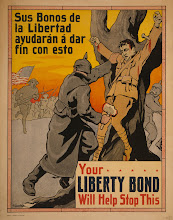
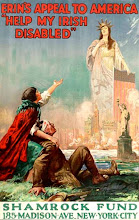
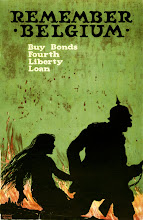
German troops perpetrated the Rape of Belgium over Aug-Sept 1914, burning villages to the ground and killing over 1,000 civilians. Germans then adopted the classic belligerent tactic of blaming their victims for the atrocities they were "forced" to commit. German atrocities inspired the free-world outrage expressed in this heavy-handed piece of propaganda:

Pretty snappy imagery, don't you think? The Allied soldier is suspended in a Christ-like pose while the 1915 version of Darth Vader is startled by America riding to the rescue. Study the poster carefully to appreciate its ability to inspire fear and loathing: the German is noticeably larger than his victim, whose feet dangle several feet above the ground. This conveys a sense of super-human strength which is, of course, rendered in evil tones. Germans deny freedom and liberty. Germans wantonly kill. Germans are evil.

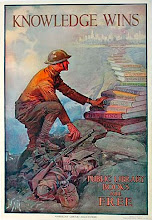
This next shot could any one of the Belgian villages razed by German troops or even Leuven, which suffered the destruction of its university library.
The Germans displaced 40,000 people, looted Leuwen of food and industrial goods and killed 248 people, including the mayor and police force. Belgium had been guaranteed neutrality in an 1839 treaty with Prussia but exigencies of Germany's 1914 war plans made that treaty "a scrap of paper". German atrocities in Leuwen helped inspire this evocative image:


The next shot hints at the 20th century and extant building walls suggest Dresden after it was firebombed in 1945. Perhaps TheRaven is playing with you and all these images really date from WW2. Horses were used throughout the war, especially in Russia. Wartime destruction renders familiar places anonymous, wouldn't you agree?
The Dresden theme is repeated here with a solitary figure, perhaps taking a picture of total devastation. The man's head is down and he appears to be holding something, which suggests use of a early/mid century Rollei camera.

Each of these photos could be plausibly represented as documentation of war. Yet none of them were taken in Belgium, France, Germany, Russia, Poland or any other European participant of either WW1 or WW2.

All photos were taken in the American heartland, in the aftermath of an event that the subsequent, official investigative report called "the worst civil disturbance since the Civil War".

Welcome to Tulsa, Oklahoma on June 1, 1921. All photos presented above were obtained from the report. You've been looking at the destruction of what was, until May 31, 1921, a prosperous black community named Greenwood.

The report observes that the 1920 census under-counted Tulsa’s African-American community, but still notes that Greenwood included “…191 businesses. There were fifteen doctors, one chiropractor, and two dentists practicing in the district as well as three lawyers. This section of town contained a library, two schools, a hospital, and an office of the Tulsa public health services. Two news papers, the Tulsa Star and the Oklahoma Sun...” Blacks made up about 11% of Tulsa’s population and were clustered in Greenwood, which was a street-grid neighborhood about one mile long.

The incident began in typical fashion: a rumor fanned by a racist newspaper, a white mob and an inevitable, brutal lynching. What happened next sets Tulsa apart in the annals of racist brutality: a mob of roughly 2,000 whites set upon Greenwood with clear intent to destroy it. Blacks fought back and inflicted casualties but were severely outnumbered and eventually overwhelmed. Between 100 and 300 people died and the 1,256 houses, stores and structures in Greenwood were burned to the ground. The attackers employed several aircraft to drop incendiaries. Greenwood suffered exactly like Belgian villages in 1914, with white Oklahomans playing the role formerly taken by the Kaiser's murderous troops.

The report is exhaustive, compassionate, poignant and through no fault of the Commission that authored it, a monumental insult. The 1st and only report on the Greenwood atrocities is dated February 28, 2001. The magnitude and one-sided nature of death and destruction in Tulsa suggests that characterization as a “race riot” is at best, quaint. Greenwood wasn’t punished for being black; Greenwood was punished for being black and prosperous. In that context, the only appropriate description is pogrom.  

Despite all available evidence, no one was ever prosecuted for the hundreds of crimes committed in Tulsa on May 31 and June 1, 1921. Surviving victims were, however, promptly arrested. A grand jury later found that blacks were solely responsible for Greenwood's destruction. This may qualify Greenwood as the penultimate expression of Jim Crow brutality and violation of the Constitutional guarantees that Americans have fought to preserve for 223 years. Our last photo shows American soldiers who fought to defend liberty against German aggression in the Great War:


You don't have to believe TheRaven. Read the full report for yourself, here: http://www.okhistory.org/trrc/freport.htm